

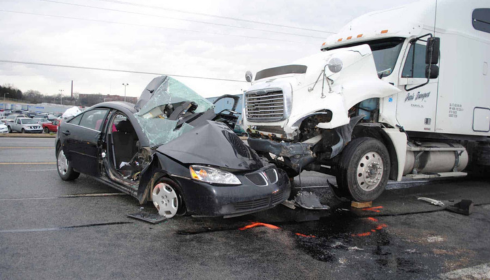
Truck accidents in Indianapolis are not simply larger versions of car accidents. They are fundamentally different events that carry a far higher risk of catastrophic injury, long-term disability, and financial disruption. When a commercial truck collides with a passenger vehicle, the outcome is often determined by physics before fault is ever considered.
Passenger vehicles share the road with semi trucks and commercial vehicles on major routes like I-65, I-70, I-465, and heavily traveled surface roads throughout Marion County. While these trucks are essential to daily commerce, their presence dramatically increases the severity of collisions when something goes wrong. Many injured individuals only begin to understand how different these crashes are after speaking with a truck accident attorney in Indianapolis who has seen the long-term consequences of commercial vehicle collisions.
Vaughn A. Wamsley regularly represents Indianapolis residents whose lives were altered in an instant by crashes involving large trucks. Understanding why truck accidents are so dangerous is critical to protecting both physical recovery and future stability.
The massive size and weight difference
The most obvious reason truck accidents cause greater harm is the enormous size and weight difference between commercial trucks and passenger vehicles. This imbalance dictates how force is transferred during a collision.
• A fully loaded semi truck can weigh up to 80,000 pounds, while most cars and SUVs weigh a fraction of that amount. During impact, the smaller vehicle absorbs most of the energy, leaving occupants vulnerable to severe trauma.
• The height of a truck’s front bumper and frame often aligns with the doors, windows, and roof of passenger vehicles, increasing the likelihood of cabin intrusion.
• Underride crashes, where a smaller vehicle slides beneath a trailer, are particularly dangerous and often result in catastrophic injuries or fatalities.
Longer stopping distances increase crash severity.
Commercial trucks require significantly more distance to stop than passenger vehicles, even under ideal conditions. This reality plays a major role in crash dynamics.
• At highway speeds, a loaded truck may require hundreds of feet to stop completely, far exceeding the stopping distance of a car.
• Sudden traffic slowdowns on Indianapolis interstates leave truck drivers with limited ability to avoid collisions.
• Rear-end impacts involving trucks often occur at higher force levels, increasing the likelihood of severe injuries.
Reduced maneuverability and blind spots
Trucks are far less agile than passenger vehicles, which limits a driver’s ability to avoid hazards.
• Large blind spots on all sides of a truck make it difficult for drivers to see nearby vehicles.
• Lane changes and turns require more space and time, increasing the risk of side-impact collisions.
• Passenger vehicles traveling alongside or behind trucks may be invisible to the driver for extended periods.
Common injuries in truck accidents
Injuries from truck accidents are often severe due to the forces involved.
• Traumatic brain injuries frequently occur when vehicles are struck or crushed.
• Spinal injuries may lead to long-term mobility limitations or permanent impairment.
• Multiple fractures and crush injuries often require surgical intervention and extended rehabilitation.
• Internal injuries may not be immediately apparent but can become life-threatening without prompt care.
Delayed symptoms after truck crashes
Truck accident victims often experience delayed symptoms that complicate recovery.
• Adrenaline can mask pain in the hours immediately following the crash.
• Neurological symptoms may develop days later, indicating serious brain trauma.
• Internal bleeding or organ damage may worsen without early diagnosis.
Hospitals throughout Marion County frequently document delayed-onset injuries in truck accident cases, which later become important when insurers question treatment timelines.
Complex liability in commercial truck accidents
Truck accident cases are rarely straightforward because multiple parties may share responsibility.
• The truck driver may have been fatigued, distracted, or operating at unsafe speeds.
• The trucking company may have failed to enforce safety policies or provide proper training.
• Maintenance providers or cargo loaders may have contributed to unsafe vehicle conditions.
Determining responsibility requires careful investigation and documentation.
Federal and state trucking regulations
Commercial trucks operate under strict safety regulations designed to protect the public.
• Hours-of-service rules limit how long drivers can operate without rest.
• Maintenance regulations require regular inspections and repairs.
• Cargo securement rules prevent shifting loads that destabilize vehicles.
Violations of these regulations are frequently linked to serious truck accidents.
Indianapolis traffic conditions amplify risk
Local traffic patterns increase the danger posed by large trucks.
• Heavy commercial traffic on I-65 and I-70 raises collision risk during peak hours.
• Construction zones reduce lane width and stopping distances.
• Urban delivery routes place large trucks on smaller city streets with pedestrian and cyclist traffic.
These conditions make truck accidents more likely and more severe.
Insurance challenges are unique to truck accidents.
Truck accidents often involve substantial insurance coverage, but accessing it is rarely simple.
• Trucking insurers aggressively investigate and defend claims.
• Victims may face pressure to accept early settlements.
• Documentation gaps are often used to reduce claim value.
Understanding these challenges helps protect long-term recovery.
How Marion County courts view truck accident cases
Marion County courts recognize the severity of truck accident cases and closely examine evidence. Judges and juries focus on safety compliance, injury severity, and consistency of documentation.
Clear timelines and thorough records are critical in these cases.
Steps to take after a truck accident
Immediate action can significantly affect recovery and future options.
• Seek medical care immediately, even if symptoms seem manageable.
• Preserve evidence from the crash scene whenever possible.
• Avoid recorded statements without understanding potential consequences.
• Document symptoms, treatment, and recovery progression.
Why early guidance matters after truck accidents
Truck accidents often leave victims facing overwhelming physical, emotional, and financial challenges. Early guidance helps protect against mistakes that insurers exploit.
Vaughn A. Wamsley works with Indianapolis truck accident victims to ensure injuries are fully documented and responsibility is accurately evaluated. When a collision with a commercial vehicle changes your life, speaking with a truck accident lawyer can help protect your health, your rights, and your future.